Get Real Answers, Not Just Code
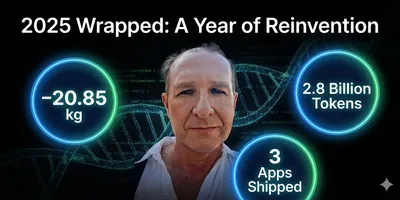
In December I wrote my 2025 Wrapped post and made a promise: scale the apps. Ship less, improve more. Turn experiments into something people would actually come back to.
Six months later, I can tell you what “scaling” actually meant. It wasn’t a flood of new features. It was a quieter, harder question: who is this for, and what are they trying to get done?
That question changed everything.
The homework problem
Here’s a moment every creator knows.
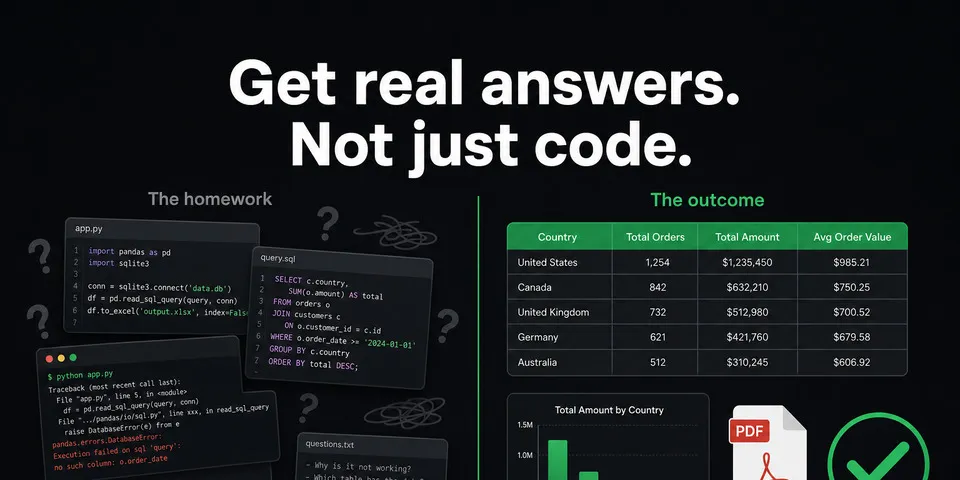
You ask AI for help. It gives you something back — often code, or steps, or a wall of text that sounds useful. Then you’re left with the homework. Copy this. Install that. Figure out the rest yourself.
I built ExeCode because I was tired of setup friction. I wanted to run a script without spinning up a whole dev environment. Fair enough — but the more I watched how people actually used it, the clearer the real problem became.
They didn’t want to run code. They wanted the CSV. The report. The chart they could drop into a client email. The invoice turned into a clean table.
That’s when the product shifted. ExeCode stopped being “run code instantly” and started being “get real answers, not just code.” Connect Stripe, ask for an MRR summary, get a spreadsheet back. Upload a sales CSV, get a breakdown by region. No terminal. No Python lesson. Just the thing you asked for, sitting in the chat ready to download.
I had to unlearn my own instincts as a builder. I kept wanting to explain how it works. Creators wanted to know what they get.
ChatLima grew up too
ChatLima had a parallel journey, just quieter.
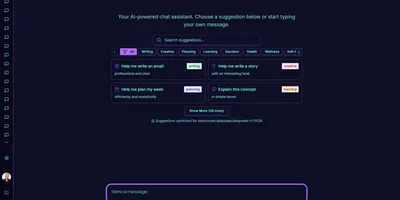
It started as a free beta — multiple AI models, web search, tools. Fun to build. Genuinely useful if you lived in it every day. But “try my chatbot” only gets you so far when your users are solopreneurs juggling client work, content, research, and admin across a dozen tabs.
So ChatLima started feeling less like a demo and more like a workspace. Projects to group conversations and files by client or topic. Chats that don’t vanish when you click away. A stop button when a response is going nowhere. Clearer plans so you know what you’re paying for and why.
If you’re a creator running five threads at once — one for a landing page rewrite, one for competitor research, one for a client brief — you don’t need another clever AI trick. You need the work organised and under control.
That’s the shift. Same tool. Different promise.
Why I started charging
I’ll be honest: putting a price on something you built with AI feels strange.
Both apps started generous. Free beta. Experiment freely. See what happens. That was the right call early on — I needed feedback more than revenue.
But usage costs real money. Every model call, every search, every sandbox run has a bill attached. And free attracts a lot of curiosity that never turns into actual use. The people who pay — even a small monthly amount — tend to be the ones who show up with a real task and tell you what’s broken.
ChatLima moved to credits and subscription tiers. ExeCode to a Pro plan for real execution. Not because I got greedy. Because sustainability matters if you want to keep improving something for the people who depend on it.
The first time someone said “this saved me two hours,” the awkwardness around charging faded fast.
What I’d tell another creator
The lesson I keep relearning: build for the outcome, not the interface.
Creators and solopreneurs don’t buy chatbots. They buy time back. Clarity. Something they can send to a client, file in a folder, or act on before lunch.
My job stopped being “can AI do this?” and started being “does this save someone an afternoon?”
I’m still not a traditional developer. I still build with AI as my co-pilot. But I’m thinking more like a product owner now — less about what’s technically impressive, more about what a real person with a real Tuesday afternoon actually needs.
2025 was about proving I could ship. 2026, so far, has been about proving someone would use what I shipped — and come back because it did something useful, not because it was novel.
If you’re building with AI right now, start there. Not “what can my app do?” but “what does someone get when they’re done?”
That’s the whole game.
Try ChatLima if you want one place for your AI work. Try ExeCode if you want the done thing, not the homework. Or just start building for the outcome you wish someone had already handled.